Quick Answer
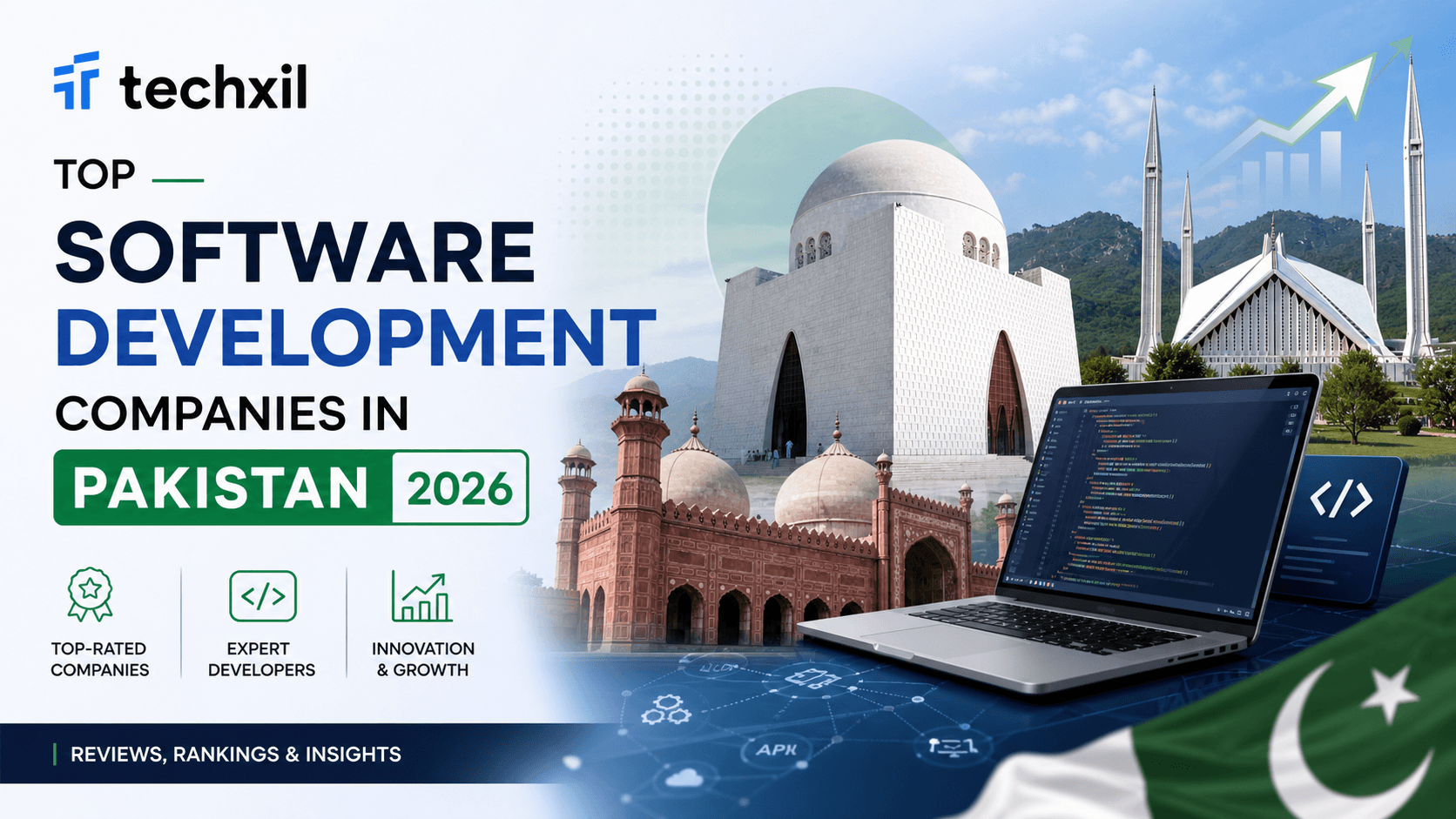
Pakistan has three main software development hubs, each with a different strength: Lahore (largest concentration of companies, strongest in product/SaaS and AI-integrated builds), Karachi (oldest and largest tech hub, strongest in fintech and enterprise software), and Islamabad (startup-oriented, most cost-competitive). When evaluating any Pakistani software house, check PSEB registration, a verifiable portfolio, independent client references, and Clutch/GoodFirms review patterns — and always start with a small paid trial before a longer commitment.
Why Which City You Pick Actually Matters
Most "top software companies in Pakistan" lists are just alphabetised directories — they don't tell you anything about which company actually fits your project. The more useful starting point is understanding that Pakistan's three main tech hubs specialise differently, shaped by their own economic history, and that specialisation is a better filter than city prestige alone.
Lahore vs. Karachi vs. Islamabad
Lahore — The Largest Concentration, Product & SaaS Focus
Lahore has become Pakistan's biggest IT hub by sheer number of companies, home to established names like Systems Limited and Netsol alongside hundreds of newer software firms serving clients across North America, Europe, and the Middle East. What distinguishes Lahore's ecosystem is process maturity — many companies here run structured product-development workflows with dedicated QA teams, DevOps pipelines, and increasingly, AI integration capability. If you're building a SaaS product, a mobile-first product, or anything where ongoing iteration matters more than a one-off delivery, Lahore's density of product-focused shops is a real advantage.
Karachi — Pakistan's Oldest and Largest Tech Hub, Fintech Strength
Karachi is Pakistan's largest city and its oldest technology hub, home to companies with genuinely long track records — TPS, founded in 1996, now powers banking infrastructure across more than 30 countries; Arpatech, operating since 2003, runs offices in the US, UK, and UAE. Karachi's specialisation leans toward fintech, enterprise software, and multinational-scale operations, partly because it's Pakistan's financial capital and partly because of that two-decade-plus head start. If your project involves payments, banking-adjacent compliance, or enterprise-scale integrations, Karachi's fintech-heavy talent pool is worth weighing.
Islamabad — Startup Ecosystem, Cost-Competitive
Islamabad's tech scene is younger and more startup-oriented, backed by National Incubation Centers (NICs) and government-supported accelerator programmes. Companies here — 10Pearls among the better-known — tend to serve a mix of local startups and international clients. Islamabad (and the neighbouring Rawalpindi corridor) is generally the most cost-competitive of the three cities, which matters if budget is the binding constraint on your project.
| City | Known For | Best Fit |
|---|---|---|
| Lahore | Largest hub, product/SaaS process maturity, AI integration | SaaS products, mobile apps, ongoing iteration |
| Karachi | Oldest hub, fintech, enterprise-scale, multinational offices | FinTech, banking-adjacent, enterprise integrations |
| Islamabad | Startup ecosystem, NIC incubators, cost-competitive | Budget-conscious builds, early-stage startups |
City generalisations, not hard rules — strong companies of every type exist in all three cities. Techxil itself is based in Karachi.
What PSEB Registration Actually Tells You
The Pakistan Software Export Board (PSEB) is the government body overseeing the country's IT export industry. A PSEB-registered company is formally recognised, subject to basic regulatory oversight, and eligible for government export-support programmes. It's a genuinely useful baseline filter — a company operating at real scale, working with international clients, will almost always be registered. But treat it as a floor, not a guarantee: registration confirms a company is a real, accountable business, not that it's a good one. It narrows your shortlist; it doesn't replace due diligence.
Software House vs. Freelancer: Which Fits Your Project
Pakistan has both a large freelance developer population (heavily represented on Upwork and Fiverr) and thousands of registered software companies. The right choice depends on project shape:
- Freelancer — cheaper, faster to start, fine for small, well-defined, short tasks (a landing page, a script, a bug fix). Higher risk for anything longer: no backup if they become unavailable, no formal QA, no company to hold accountable.
- Software house — a team with process, continuity, and accountability. If one developer leaves, the project continues. Better fit for an MVP, an ongoing product, or anything client-facing where reliability matters more than the lowest possible price.
Choosing by Specialisation, Not Just Location
Beyond city, the more useful filter is what a company actually builds most. A few common specialisations worth asking about directly:
- Web & Laravel/PHP shops — Pakistan has one of the larger concentrations of Laravel developers globally, reflected in dozens of dedicated Laravel-focused companies listed on Clutch and The Manifest. See our dedicated guide to choosing a Laravel development company in Pakistan if PHP/Laravel is your stack.
- Mobile app agencies — native iOS/Android and cross-platform (Flutter, React Native) shops, often overlapping with the product-focused Lahore ecosystem described above. Our own Mobile App Development service covers this model.
- Enterprise/fintech integrators — concentrated in Karachi, experienced with compliance-heavy, integration-dense builds. See Enterprise Software.
- Startup/MVP specialists — fixed-scope, fast-turnaround shops built for early-stage founders. See Startup MVP.
A Practical Evaluation Framework
Once you have a shortlist, five checks separate a safe choice from a risky one:
- PSEB registration — confirm it directly; a legitimate company won't hesitate to share its registration details.
- A verifiable portfolio — real, named projects you can look up, not just client logos with no detail.
- Independent references — ask for two clients you can actually contact, not case studies the company wrote itself.
- Review patterns on Clutch.co or GoodFirms — look for a consistent pattern across many reviews, not a handful of five-star outliers that could be incentivised.
- Willingness to run a paid trial — a one- to two-week trial sprint before a longer commitment reveals more about real delivery quality than any sales conversation.
A company that hedges on more than one of these is a signal to keep looking, regardless of how polished its website or portfolio looks.
Where Cost Fits In
Pricing varies significantly by city, company seniority, and project type — a fixed-scope MVP prices very differently from an ongoing enterprise engagement. For a full breakdown against Eastern European rates, see our Pakistan vs. Eastern Europe pricing guide; for Laravel-specific project cost ranges, see the Laravel guide linked above.
Where Techxil Fits
Techxil is a PSEB-registered software company based in Karachi, working across enterprise software, web and mobile development, AI automation, and startup MVPs for clients internationally — see our case studies for verifiable, named project outcomes rather than logo lists, and our About page for the company's background. If you're evaluating multiple Pakistani software houses, a free scoping call is a low-commitment way to compare us directly against your shortlist.
Key Takeaways
- Lahore has the largest concentration of software companies and leads in product/SaaS development; Karachi is the oldest, largest hub with fintech and enterprise strength; Islamabad is startup-oriented and the most cost-competitive.
- PSEB registration is a useful baseline filter, not a quality guarantee — verify it, then keep evaluating.
- A software house beats a freelancer for anything beyond small, well-defined tasks, due to continuity and accountability.
- Filter by specialisation (Laravel/PHP, mobile, enterprise/fintech, startup MVP) as much as by city.
- Always verify with independent references and a paid trial sprint before a longer commitment.
Frequently Asked Questions
Which Pakistani city has the best software development companies?
There's no single "best" — Lahore leads in product/SaaS density, Karachi in fintech and enterprise-scale experience, Islamabad in startup ecosystem and cost competitiveness. The right fit depends on what you're building.
What does PSEB registration actually mean for a software company?
It confirms the company is formally recognised by Pakistan's IT export regulator and eligible for government export-support programmes — a useful baseline filter, but not proof of quality on its own.
How many software companies are there in Pakistan?
Tens of thousands of registered companies and freelancers operate across the industry, concentrated mainly in Lahore, Karachi, and Islamabad, with IT exports exceeding $4.5B annually.
What's the difference between a software house and a freelancer in Pakistan?
A software house offers team continuity, formal QA, and accountability; a freelancer is cheaper but riskier for anything beyond small, short, well-defined tasks.
What should I check before signing with a Pakistani software company?
PSEB registration, a verifiable portfolio, independent client references, consistent review patterns on Clutch/GoodFirms, and willingness to run a paid trial sprint first.
Senior Product & SaaS Product Designer · 9+ years · Dubai, UAE
Adil transforms complex problems into clean, intuitive digital experiences. With expertise spanning FinTech, SaaS, and B2B platforms across 5+ industries, he writes about product design, digital strategy, and the technology landscape shaping South Asia's growing tech economy.